Like us!
 Follow us!
 Follow us !
 Follow us!
 Contact us!
 Subscribe!
 Follow Us!
 Follow Us!


- Standard Immigration 25 June 2026
Federal-Provincial-Territorial Immigration Ministers Meet to Discuss Sustainable Immigration
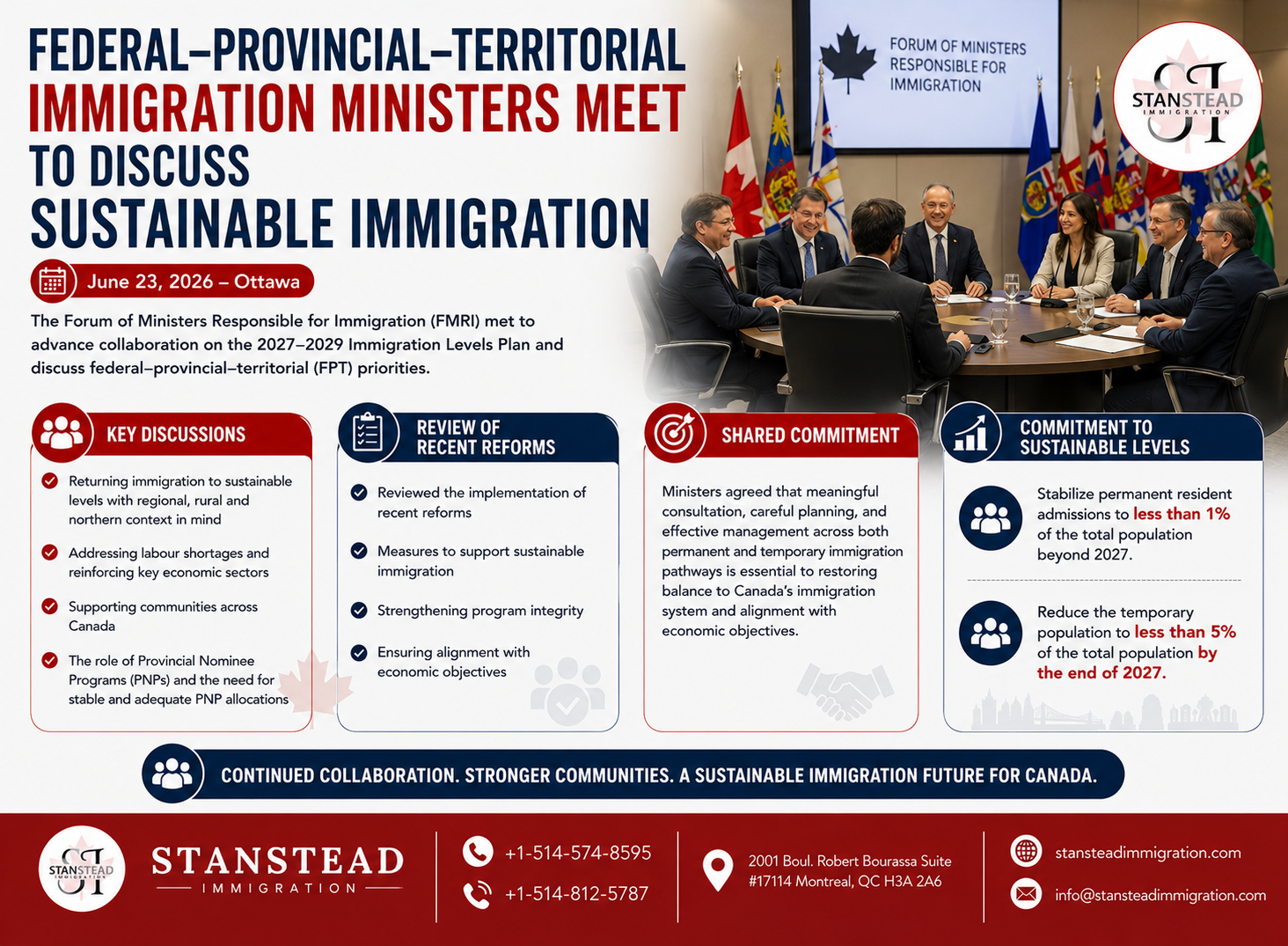
The Forum of Ministers Responsible for Immigration (FMRI) convened on June 23, 2026 to advance collaboration on the 2027-2029 Immigration Levels Plan and to discuss federal-provincial-territorial (FPT) priorities — a landmark meeting that will shape the future of immigration across every province and territory in Canada.
Continued collaboration. Stronger communities. A sustainable immigration future for Canada.
On June 23, 2026, Canada's immigration ministers from the federal, provincial, and territorial governments came together through the Forum of Ministers Responsible for Immigration (FMRI) — a critical meeting designed to align priorities across the country as Canada prepares its 2027-2029 Immigration Levels Plan.
The meeting addressed one of the most pressing questions facing Canada's immigration system today: how to return to sustainable immigration levels while continuing to address labour shortages, support communities, and maintain Canada's global reputation as a welcoming, well-managed destination for newcomers.
Key Discussion Topics at the FMRI Meeting
Returning to Sustainable Levels
Ministers discussed returning immigration to sustainable levels, with specific attention to regional, rural, and northern contexts — ensuring that smaller communities across Canada are not left behind.
Addressing Labour Shortages
A key priority was reinforcing key economic sectors facing critical labour shortages — ensuring that immigration continues to meet the real workforce needs of Canadian employers and industries.
Supporting Communities Across Canada
Ministers examined how immigration can be better tailored to support communities across Canada — from major urban centres to remote northern and rural regions that depend on newcomers to sustain their economies.
Provincial Nominee Programs (PNPs)
The critical role of Provincial Nominee Programs and the need for stable and adequate PNP allocations was a major topic — recognising that provinces play a central role in directing immigration to where it is needed most.
What Was Reviewed at the Meeting?
Ministers reviewed the implementation of recent reforms to Canada's immigration system — examining what has worked, what needs adjustment, and how measures introduced over the past year have begun to bring greater stability.
Key areas reviewed included measures to support sustainable immigration levels, efforts to strengthen program integrity, and progress on ensuring immigration is aligned with Canada's economic objectives and labour market needs.
What Did Ministers Agree On?
Ministers agreed that meaningful consultation, careful planning, and effective management across both permanent and temporary immigration pathways is essential to restoring balance to Canada's immigration system.
This shared commitment reflects a recognition that sustainable immigration is not just a federal responsibility — it requires genuine collaboration between all levels of government, with provinces and territories playing an equal and active role.
"Continued Collaboration. Stronger Communities. A Sustainable Immigration Future for Canada."
Canada's Two Key Targets for Sustainable Immigration
The FMRI meeting reinforced Canada's commitment to two specific and measurable targets that will define the immigration landscape through 2027 and beyond:
Stabilize permanent resident admissions to less than 1% of the total Canadian population beyond 2027 — bringing PR levels back to a manageable and sustainable rate that communities can absorb and support.
Reduce the temporary resident population to less than 5% of the total Canadian population by the end of 2027 — addressing the rapid growth in temporary residents that has placed pressure on housing, services, and communities.
Why This Meeting Matters for Immigrants and Newcomers
The decisions made in rooms like the FMRI meeting directly shape the immigration pathways available to hundreds of thousands of people every year. When federal and provincial ministers align on immigration targets, program priorities, and PNP allocations, it affects draw rounds, processing times, selection criteria, and the overall number of newcomers Canada welcomes.
The emphasis on sustainability does not mean Canada is closing its doors — it means Canada is making smarter, more strategic decisions about who it welcomes, when, and where. For prospective immigrants, this means the competition for permanent residence spots will remain significant — and having the right professional guidance has never been more important.
The 2027-2029 Immigration Levels Plan will be one of the most consequential policy documents for newcomers in recent years. Understanding what it means for your specific pathway — and acting before targets are reduced — is critical to protecting your immigration future.
The Role of Provincial Nominee Programs Going Forward
One of the most significant discussions at the FMRI meeting was the future of Provincial Nominee Programs (PNPs). PNPs allow provinces and territories to nominate candidates who meet their specific labour market and community needs — and they have become one of the most important pathways to permanent residence in Canada.
Ministers recognised the need for stable and adequate PNP allocations — acknowledging that unpredictable changes to PNP targets create uncertainty for both applicants and employers. A more stable, collaborative approach to PNP management will benefit immigrants and communities alike.
Shared Ministerial Commitment — June 23, 2026
"Meaningful consultation, careful planning, and effective management across both permanent and temporary immigration pathways is essential to restoring balance to Canada's immigration system and alignment with economic objectives."
The Forum of Ministers Responsible for Immigration met to advance collaboration on the 2027-2029 Immigration Levels Plan and discuss federal-provincial-territorial priorities — continued collaboration, stronger communities, a sustainable immigration future for Canada.
— Forum of Ministers Responsible for Immigration | Ottawa, June 23, 2026How Stanstead Immigration Can Help You Navigate What Is Coming
Changes to immigration levels plans, PNP allocations, and sustainability targets directly affect the timing, strategy, and chances of success for immigration applicants. At Stanstead Immigration Services (SIS), we monitor every policy development — including meetings like the FMRI — so we can provide our clients with the most current, strategic guidance available.
Our CEO, Humera Khan (CICC No. R711918), leads a team of regulated professionals with a 95% success rate and over 4,900 satisfied global clients. Whether you are planning your first immigration application or navigating a complex multi-step process, we are here to help you stay ahead of every change.
Ahead of Every Policy Change. Beside Every Client.
Stanstead Immigration Services stays at the forefront of Canadian immigration policy so our clients never miss an opportunity — and never get caught off guard by a change that affects their future in Canada.
Ready to secure your future before targets change?
Book your free consultation with Stanstead Immigration today — stansteadimmigration.com